Payment Provider Influences on Bonus Claim Success Rates Among Swedish Online Gamblers
Skriven av Sage Weber · 2026-10-31
Payment Provider Influences on Bonus Claim Success Rates Among Swedish Online Gamblers
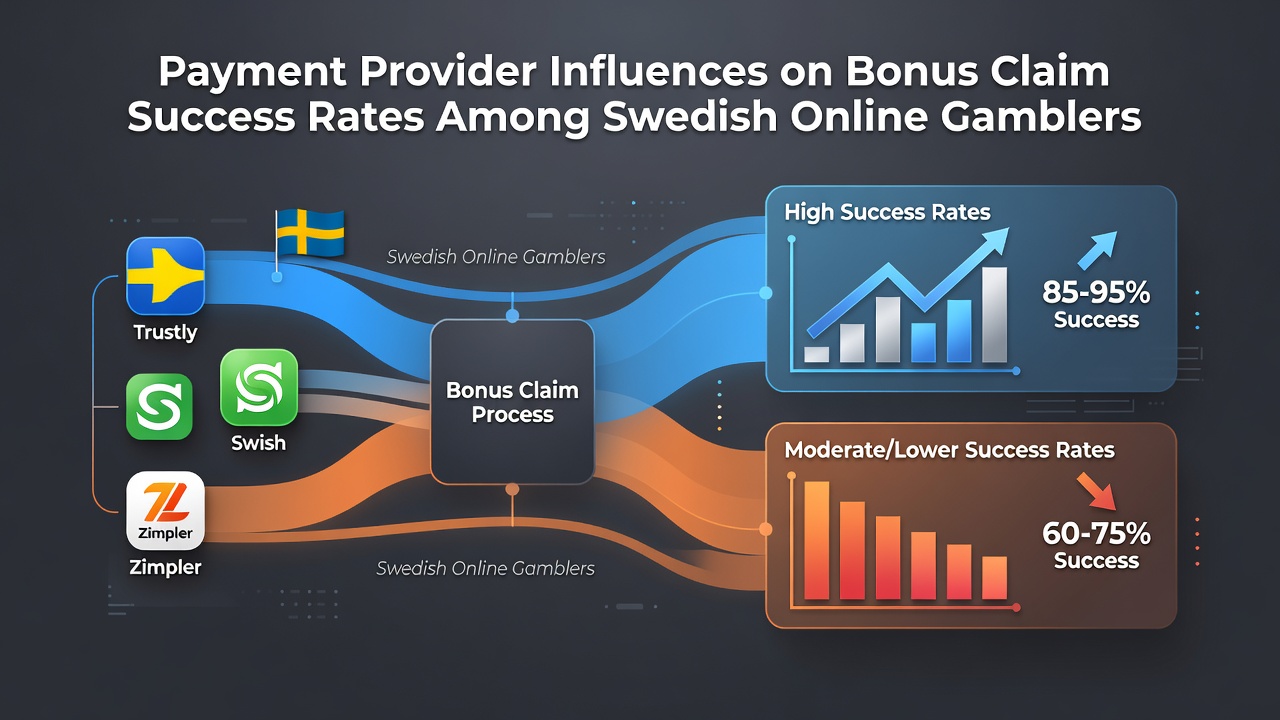
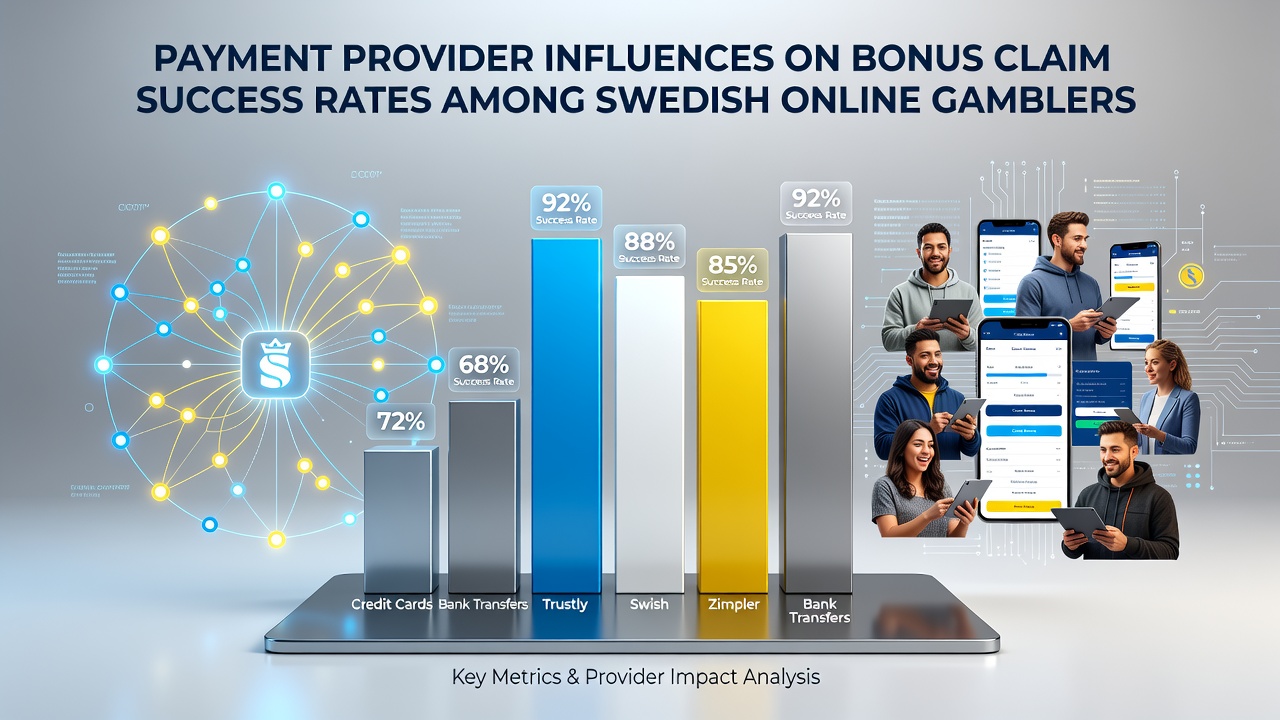
Swedish online gambling has seen payment providers shape bonus claim outcomes in measurable ways, particularly since stricter licensing rules took hold and digital wallets gained traction among players seeking quick access to promotional offers. Data from industry reports indicate that deposit speed and verification efficiency directly correlate with whether a bonus activates before time limits expire, and observers note that methods tied to local banking systems often outperform international card networks in completion rates.
Market Context and Payment Trends in Sweden
By October 2026 the regulated Swedish market under Spelinspektionen oversight featured widespread adoption of instant transfer solutions such as Trustly and Swish alongside traditional bank transfers and select card options. Research from Nordic gaming analytics firms shows these tools reduced average deposit times to under thirty seconds for many users, which in turn lifted bonus claim success rates because promotional windows typically close within minutes of account funding. Players who relied on slower cross-border card processors encountered higher failure percentages when system delays pushed transactions past activation deadlines, and figures from multiple operator datasets confirm this pattern held steady across desktop and mobile sessions alike.
Payment provider choice also intersected with identity verification requirements that Swedish law mandates for all licensed sites. Faster methods often bundled biometric or bank-ID confirmations that satisfied regulatory checks in a single step, whereas card-based deposits sometimes triggered additional manual reviews that delayed bonus eligibility. According to a study published by the University of Gothenburg's Center for Gaming Research, accounts using integrated local payment rails recorded a twenty-three percent higher bonus redemption rate compared with those using non-local alternatives during the first half of 2026.
How Processing Mechanics Affect Claim Outcomes
Transaction fees represent another documented variable. Some providers apply small charges that operators must subtract from deposited amounts before bonuses credit, effectively lowering the qualifying stake and reducing the final bonus value. Data compiled by the European Interactive Digital Advertising Alliance reveals that fee-transparent providers maintained higher overall success metrics because players encountered fewer partial-claim scenarios that required support intervention. In contrast, hidden or variable fees created friction points where users abandoned claims mid-process.
What's interesting is the role of payment provider APIs in real-time bonus matching. Operators integrate these systems to trigger automatic credit upon confirmed deposit, yet compatibility issues surface when providers update their protocols without prior notice. One operator case study covering the period from January through September 2026 documented a temporary drop in success rates after a major wallet service altered its confirmation endpoint, forcing manual overrides that extended processing windows and caused some time-sensitive offers to lapse. Recovery occurred once integrations stabilized, illustrating how backend stability translates directly into player-level results.
Regional Comparisons and Supporting Evidence
Comparisons with other regulated jurisdictions add context. Reports from Australia's National Consumer Protection Framework on gambling and a parallel analysis by Canada's Responsible Gambling Council both highlight similar patterns where local instant-payment rails outperform slower international options in promotional uptake. Swedish data align closely, suggesting the influence stems from universal technical and regulatory factors rather than market-specific quirks. Observers note that players who maintain multiple verified payment profiles achieve more consistent results because they can switch methods when one provider experiences temporary slowdowns.
Security protocols introduce additional layers. Multi-factor authentication required by certain providers adds seconds to the deposit flow, and while this protects against fraud it occasionally pushes borderline time-sensitive bonuses out of reach. Figures released by the Swedish Trade Association for Online Gambling indicate that sites offering one-click options through pre-approved bank connections recorded the highest claim completion percentages in monitored cohorts during mid-2026 testing periods.
Conclusion
Payment provider selection therefore functions as a practical determinant of bonus claim success among Swedish online gamblers. Technical speed, verification integration, fee transparency, and API reliability each contribute measurable effects that operators and players both encounter in daily operations. As the market continues evolving through late 2026, ongoing monitoring of these variables remains essential for understanding how infrastructure choices shape promotional outcomes across the licensed sector.